
理查德·派克斯利:用笔触对话光影与自然
文/张鸿宾
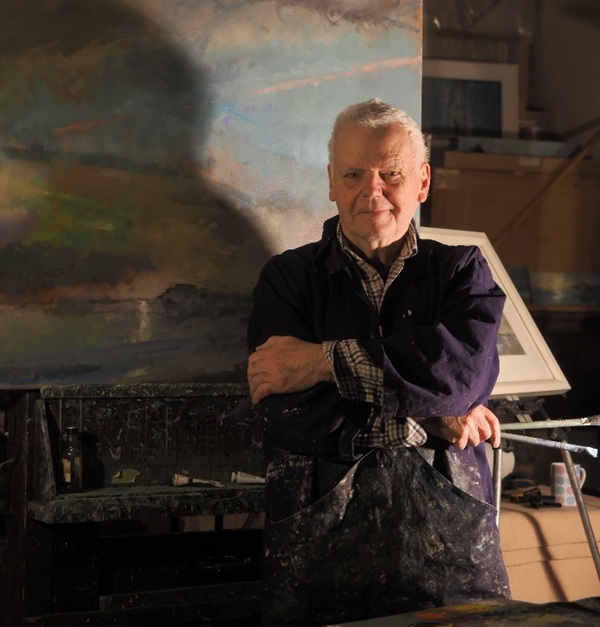
理查德·派克斯利(Richard Pikesley)是英国著名风景画家,以捕捉光影与大气变化的油画和水彩作品闻名,1974年当选新英国艺术俱乐部(NEAC)会员,2013 年至 2018 年担任该俱乐部主席;1997年当选皇家水彩画学会会员。这些荣誉确立了他在英国水彩画与油画领域的权威地位。
理查德·派克斯利于1951年出生于伦敦,是英国当代风景画领域的重要人物。他的艺术生涯始于扎实的学院训练:1969至1970年间就读于哈罗艺术学院,随后在坎特伯雷艺术学院深造,这段系统的学术训练为他日后的创作奠定了坚实的技术基础。
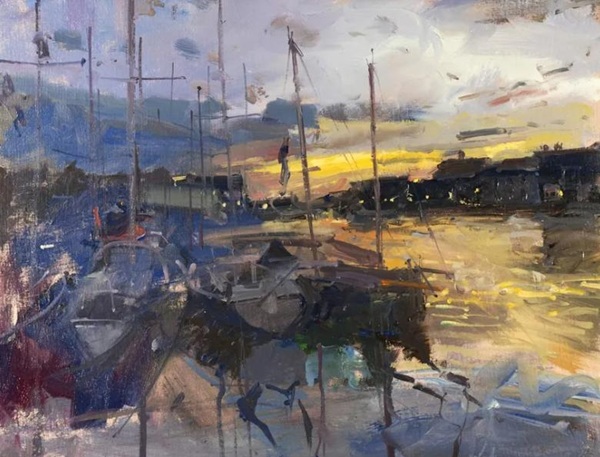
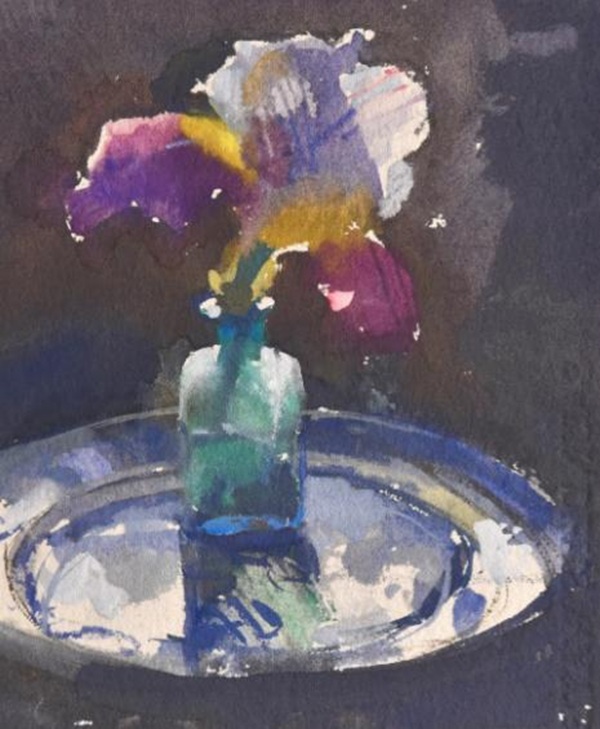
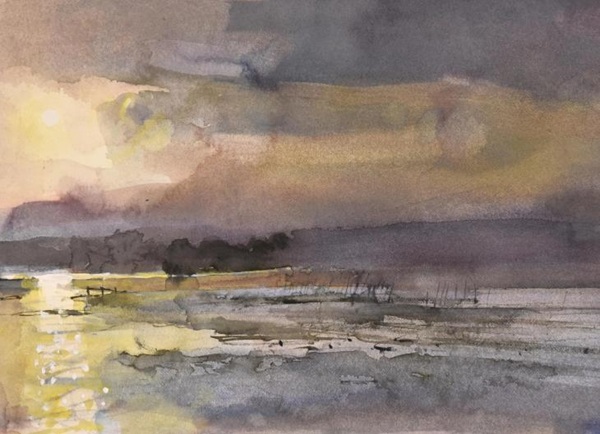
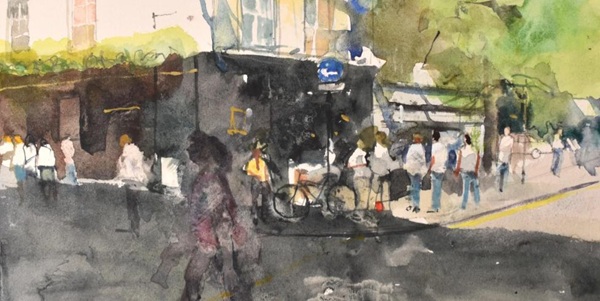
在创作方面,理查德·派克斯利以风景画见长,尤其擅长表现光线与氛围的瞬息变化。他的创作理念强调与视觉世界的直接对话,坚持在户外现场写生,从自然中汲取灵感。其作品涵盖油画与水彩两种媒介,题材广泛,从英国乡村风光到欧洲城市街景均有涉猎。他的画作被众多公共与私人机构收藏,其中包括剑桥大学圣约翰学院。
理查德·派克斯利的展览履历十分丰富。他曾多次参加皇家艺术学院夏季展、皇家西英格兰学院展等重要群展,并在英国各地举办过十余场个人画展。他的展览足迹也延伸至海外,包括加拿大、美国等地的展览。
理查德·派克斯利也是一位作家和教育家。1991年,他受 Swallow Books 出版社委托,在肯·霍华德主编的系列中撰写了一本关于风景绘画的专著,以《完整的艺术家》为标题出版。他也曾为艺术杂志撰稿,并长期从事教学工作,曾在多塞特郡韦茅斯的巴德茅斯学校任教。
新英国艺术俱乐部成立于1886年,是英国重要的艺术家协会,该俱乐部早期深受印象派和巴黎前卫艺术影响,强调对视觉世界的直接观察与写生,汇聚了如约翰·辛格·萨金特、沃尔特·西克特等重要艺术家。新英国艺术俱乐部在英国艺术史上占有重要而独特的位置,它是19世纪末艺术革新的产物,也是20世纪具象绘画传统的坚实守护者。即使在当代多元艺术环境中,它依然是英国艺术生态中不可忽视的组成部分,尤其对于喜爱现实主义与观察性绘画的艺术家和收藏家而言(理查德·派克斯利于2013 年至 2018 年担任该俱乐部主席)。
第一部分:视角的重塑 —— 艺术哲学的根基
访谈引导:您常提到的“以画意观察世界”(seeing the world 'in paint')似乎已不仅是创作手段,更像是一种内化的本能。这种观察视角是如何从最初的视觉感知演变为一种深层的艺术哲学的?
答:这确实已经成为我观察世界的方式之一。无论使用油画还是水彩,我在看到事物时,总会有一种有意识或无意识的视觉想象,将眼前景象转化为油画笔触或水彩晕染的效果。在两种媒介之间切换有时会感觉有些笨拙,因为从想象厚涂的油画色彩转为轻盈的水彩晕染,需要一点时间来调整。
1关于艺术自觉的萌芽: 您自幼便投身于写生,我很好奇那个“自觉”的时刻——是在哪一瞬间,您意识到自己不再是单纯地描摹眼前的风景,而是开始以笔触的力度、色调的冷暖和肌理的逻辑来重新解构这个世界的?
在我艺术学院的第一年,我非常幸运地接受了关于我们这门手艺基础知识的良好教学。这为我奠定了视觉艺术家需要熟练掌握的核心技能基础,包括素描、透视、明暗和色彩。我很早就意识到,创作一幅画绝不仅仅是复制。眼睛、大脑和手协同工作,才能从无数可能的图像中产生其中之一,而每一种图像都忠实于主题。因此,我的角色就是在这众多可能性中规划一条路径,最终创作出既连贯统一、又完全属于我自己的作品。

2、 现实与画布的转化博弈: 当您置身于多塞特郡(Dorset)那极具戏剧性的海岸线或起伏的丘陵间,您的思维是如何在繁杂的“现实景象”与高度概括的“画面结构”之间进行取舍与转译的?
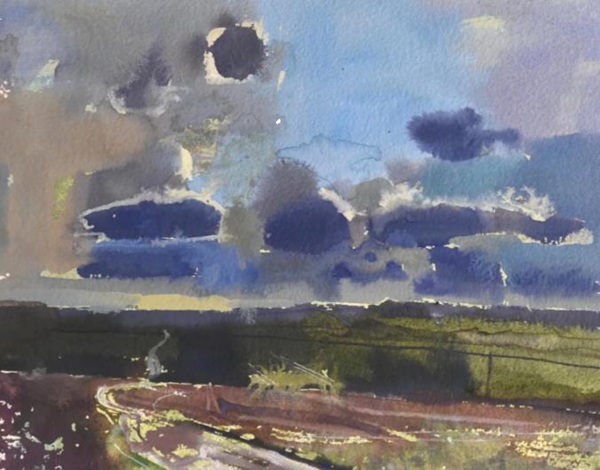
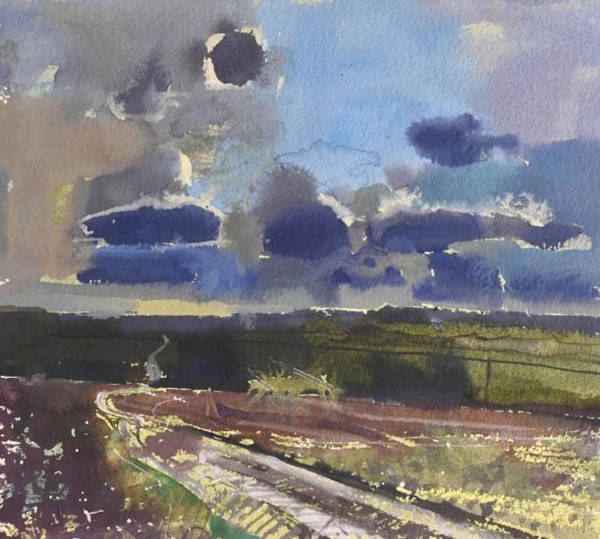
这其中很大一部分是纯粹实践性的,主要涉及如何将广阔的大自然转化到尺寸大大缩小的画布上。良好的绘画眼力是起点——决定选择什么视角,以及如何以正确的比例将其安排在画布或纸上。我经常采用逆光的方式,直接面对非常强烈的光线。从最明亮的高光到最深的阴影,整个光线的范围需要巧妙地处理,通常会在某一层次压缩色调阶梯,以便在其他地方采取更宽广的表现方式。
3、 NEAC 传统的精神内化: 您被视为英国具象绘画传统的守护者。在继承新英语艺术俱乐部(NEAC)强调“动态观察”的精髓时,您是如何巧妙地避开学院派的刻板,创造出那种既有底蕴又具现代呼吸感的个人语言的?
我从艺术学院毕业的第一年就被选为 NEAC 会员,之后花了一段时间才真正理解它的根源与传统。该俱乐部大约于1885年由一群受法国印象派和后印象派影响的英国画家创立。他们从法国归来后,发现皇家美术学院陷入了一种学院式的僵化状态,对这些年轻画家带来的新鲜空气和新思想并不 receptive。这些年来 NEAC 发生了很多变化,但它始终坚持的核心价值是:对自然的直接观察和优秀的素描。我对学院派的程序和规则从来都不太感兴趣,更喜欢找到自己的道路。

第二部分:捕光者的修行 —— 瞬时性与大气氛围
访谈引导: 在您的作品中,光影并非冰冷的物理存在,而更像是画面的灵魂,承载着某种难以言说的情感重量。
4. 对“瞬间”的执着狩猎: 您对“稍纵即逝”(fleeting moments)的追求近乎痴迷。对于您而言,这种不可重复性具有怎样的感官诱惑?在光影快速推移的几分钟内,您如何在高强度的直觉反应与精准的形体控制之间达成平衡?
我一直喜欢在事物发生变化的时刻作画。因此,一片原本可能让我兴趣不大的风景,当云影在土地上滚动、显现出其起伏的形态时,就会变得生动起来。描绘这样的时刻充满挑战,例如我需要区分清晰的阴影边缘和柔和的阴影边缘。在实践层面,这意味着我会进行很多次起稿,有些会继续推进,有些则被放弃——在我看到想要的效果时立即作画,随后几分钟则依靠视觉记忆,或等待那一刻再次出现。那些被放弃的研究同样是创作过程中重要的一部分,因此我认为必须珍视它们,因为它们教会我很多东西。
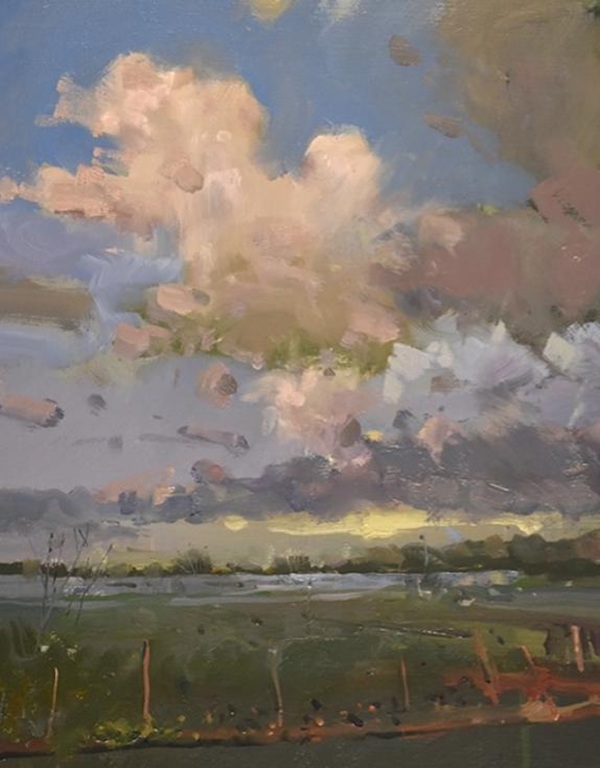
5、 不确定气象下的灵感催化: 您画作中那种浓郁的“大气氛围”令人印象深刻。英国多变的气象——从朗晴瞬间转为阴霾。对您而言,究竟是创作中的阻碍,还是某种不可或缺的、激发笔触生命力的催化剂?
面对意外或不可预测的情况时,我被迫真正去观察,而不能依赖固定的公式。我会先简单地画下一些东西作为起点,然后用手指或画笔推动颜料,努力捕捉我所看到的景象。笔触和标记的边缘是引导观者解读完成作品的重要因素,因此必须敏感而细腻地处理。
6、 光影中的精神隐喻: 您偏爱清晨、黄昏或风暴将至的特殊光效。在您的审美体系中,这些特定时刻的光影是否在视觉美感之外,还折射出某种关于生命或永恒的深层精神内涵?
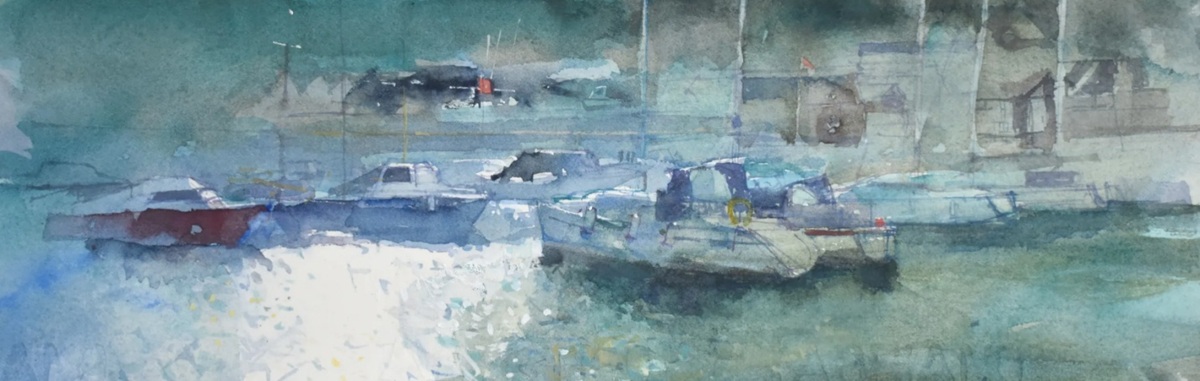
我对在晨昏第一缕光与最后一道光中描绘风景的偏爱,始于我还在教书的那段时间。当时我只能在上下班通勤的早晚短暂空隙中作画。这种经历让我懂得,光的瞬息变化中没有什么是静止的;同时,处理晨昏光线也迫使我对低光条件下出现的极细微色调渐变变得敏感。这些时刻还会显露出风景的“骨骼”,将其现代细节暂时压制下去。如今我生活在西多塞特古老的风景之中,这里有山堡和古墓,能让人感受到数千年的人类历史。当我站在 Eggardon 山上,看着夕阳在西边海面落下时,很容易感受到与那些曾在此走过的前人的连接。
第三部分:材质与叙事 —— 技法革新与“新思维”
访谈引导: 您的绘画在自由的挥洒与理性的控制之间游走,尤其在水彩领域,您展现出了一种极具现代感的实验精神。
7. 具象与抽象的辩证平衡: 英国绘画中一直存在着关于“完成度”的讨论。在创作中,您是如何判断那个“止步”的时刻的?在何种状态下,您会决定牺牲细节,转而信赖色彩的自然流淌与块面碰撞所产生的叙事力?
这是一个很难回答的问题,老实说,我也不知道。我常常会把一幅画反复推进,添加细节,然后又用更宽的笔触将其抹去。我经常不清楚自己离完成(或者说决定停手)还有多远,但必须对内心那个微小的声音保持敏感,它会告诉我已经到了。有时候,只是最后轻轻的一笔,就能让作品从“还差得远”变成“不要再动了”。

8. “新思维”水彩技法的核心: 您所倡导的“新思维”水彩技法(Watercolour Innovations)极大地拓展了这一媒介的边界。这种创新是如何在保留水彩通透本质的同时,赋予其足以与现代概念艺术对话的厚重感与表现力的?
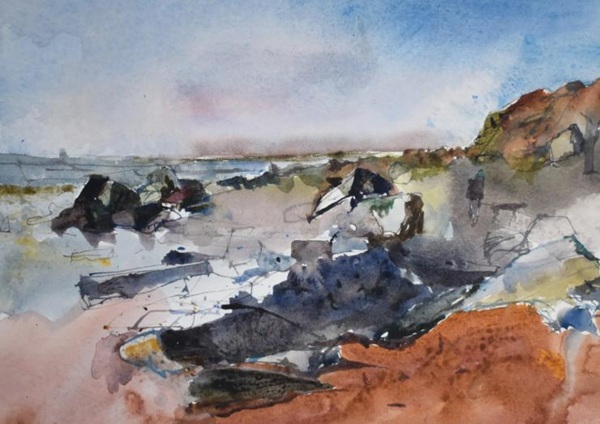
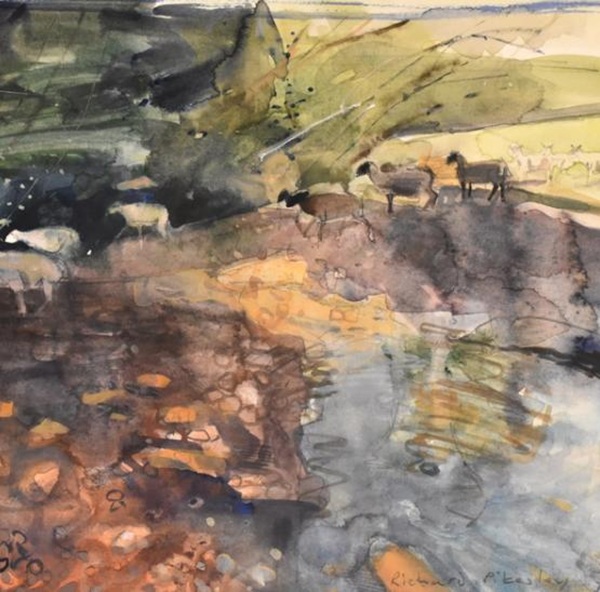
我并不认为自己在使用水彩的方式上特别具有创新性。在其历史中,水彩一直以各种方式被运用,如今英国皇家水彩协会(RWS)的会员作品也很好地体现了这种多样性。在我自己的创作中,我并不觉得必须以非常“纯粹”的方式使用这一媒介,而是经常自由地结合使用水粉和素描材料。例如,我很喜欢将不透明的水粉融入透明的水彩晕染中产生的视觉效果。目前很多针对初学者的水彩教学和教材质量很差,它们构建了一种虚假的“正统”形象,其实非常无益。
9. 油画与水彩的跨媒介互文: 作为 RWS 的杰出代表,油画与水彩在您的手中似乎是互为补充的。您是否认为,水彩那种天生的“不可预测性”,反而比油画更能契合您对自然生命力的某种理解?
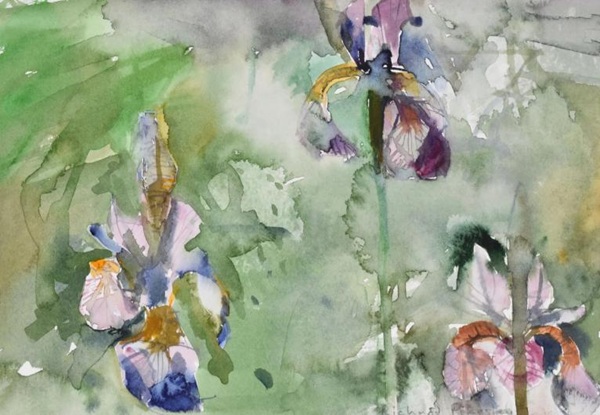
我热爱这两种媒介,尽管有时在它们之间转换会有些困难。从透明的晕染中构建世界,与用厚重、不透明的油画“一块砖一块砖”地堆砌,需要完全不同的思维方式。水彩有一种诱人的特质——随便泼洒在纸片上都可能很美,但一旦过度加工又很容易变丑。我无法过多地“指挥”水彩,它更像是一种合作关系,而不像使用油画时那样。
10. 创作阶段的“生命力”存留: 您习惯从现场速写起步,经过精细素描的推敲,最后回到工作室完善。在这个漫长的加工过程中,您通过何种创作原则,确保最终的作品依然能保留最初在那片荒野上跳动的“直觉火花”?
往往是最简略的速写才握有我所追求的品质,我会把它钉在画架上,在朝向更“完成”作品努力时始终能看到它。这些快速完成的笔记所拥有的能量,是那些有充足时间精心制作的作品往往缺乏的。
第四部分:直觉的归宿 —— 户外写生的当代意义
访谈引导: 即使在数字图像技术高度发达的今天,您依然坚持身处荒野,与自然进行面对面的直接较量。
11. 多感官同步的“现场感”: 在海风的侵袭与光影的洗礼下,除了视觉,听觉与触觉等感官体验是如何潜移默化地渗透进您的笔触与颜料中的?
我不太擅长凭空虚构!现场作画的这种“对话”特质才是点燃我创作热情的东西。它是我眼睛、眼前的景致以及正在浮现的画面之间三方进行的对话,我似乎需要这三个元素同时存在才能让它成立。
12. 数字时代的写生价值: 在这个依赖屏幕和后期合成的时代,您认为艺术家身体力行地“在场”写生,其核心价值是什么?具象绘画在当今快节奏的图像泛滥中,是否依然拥有某种不可替代的精神治愈力?
在一个急速拥抱数字与人工智能的世界里,此时此刻比以往任何时候都更需要去颂扬手、眼与大脑共同创造图像的人性特质。

第五部分:领导力与传承 —— 具象艺术的未来愿景
访谈引导: 您不仅是一位卓越的创作者,也曾肩负 NEAC 主席的重任,并在教学与理论建设上贡献卓越。
13. 机构角色的艺术反馈: 担任 NEAC 主席的这段经历,这种从宏观层面俯瞰当代艺术生态的视野,反过来对您个人的创作路径产生了怎样的启发或重塑?
那是五年全身心投入的时光,能够领导 NEAC 是我极大的荣幸。它让我明白,艺术家们可以共同相信素描、观察和绘画技艺的价值,同时又在各自的创作回应中保持真正的多样性和活力。
14. 教学中核心理念的传递: 在您的新著中,您向年轻艺术家传递的最核心理念是什么?您是否也认为,培养一种“艺术家的观察方式”远比掌握某种特定的笔法更具根本性?
对我而言,绘画必须是一个持续的“观察”与“制作”的过程,从中不时会浮现出一些可以装框的作品,作为整个创作体系中的一部分。所有这些活动对我来说都很重要,尽管其中大部分是前来参观展览的人所看不到的。我不喜欢炫技式的笔触,每一个动作都更像是一个问题而非答案,因此我很少能预见到最后一笔的到来。它只需要和之前的所有笔触或调整保持同一种性质,使那种最终的英雄式华丽收尾显得荒谬。

15. 职业生涯的自我怀疑与突破: 纵观五十余载的艺术生涯,在面对波幻莫测的艺术潮流时,您是否也曾有过瓶颈或怀疑?是什么让您始终保持对自然光影那种如同“初恋”般的热忱与好奇?
某种程度的自我怀疑一直伴随着我,但随着年龄增长,我也越来越不在意别人对我的作品的看法。在能够以专业画家身份养活自己和家人之前,我曾在学校教过几年艺术。教学的经历极大地巩固了我的绘画方法,也迫使我去检验自己真正相信什么——我必须先把想法在自己头脑中理清楚,才能进行有效的教学。

Interview Outline
Section I: The Reshaping of Perspective — Foundations of Artistic Philosophy
Lead-in: Richard, you often mention the concept of "seeing the world 'in paint'." It appears that for you, this is no longer merely a method of creation, but rather an internalised instinct. How did this perspective evolve from its origins in simple visual perception into such a profound and foundational artistic philosophy?
This does seem to have become a part of how I see the world. With both oil paint and watercolour there is a conscious or unconscious bit of visual imagination that pictures what I see in terms of touches of paint or washes of watercolour. Switching between the two media sometimes feels a bit clunky as it can take a little time to move between visualizing as impasto colour and vapourous watercolour washes,
1. The Awakening of Artistic Consciousness Having been immersed in plein air painting since your youth, I am particularly curious about the moment of "artistic awakening." Was there a specific turning point when you realised you were no longer merely depicting the scenery before you, but were instead beginning to deconstruct the world through the logic of brushwork, tonal temperature, and the tactile language of texture?
In my first year at art school I was very lucky to receive really good teaching in the rudiments of our craft. This laid down the foundation of core skills around drawing, perspective, tone and colour that a visual artist needs to understand with some fluency. I think I understood early on that making a painting had to be more than copying. Eye, brain and hand work together to produce just one of a myriad of possible images any of which would be true to the subject, so my role is to chart a course through these possibilities and end up with something which is both coherent and altogether mine.
2. The Negotiation of Translation: Reality vs. Canvas When you find yourself amidst the dramatic Dorset coastline or its rolling hills, how does your mind navigate the negotiation between the complexities of the "physical scene" and the simplified, structured abstraction of a "composition"? What guides your process of selection and translation during this transition?
A lot of this is purely practical, much of it concerned with translating the vastness of nature into the very much reduced scale of paint. A good eye for drawing is the starting point, deciding what view to select and how to place it on the canvas or paper at the correct scale. I’m often painting contre jour looking straight into very strong light and the range of light from most brilliant down to the deepest shadow needs to be managed tactfully, often compressing tonal steps at one level to allow a more expansive approach elsewhere.
3. Internalising the NEAC Tradition You are widely regarded as a guardian of the British figurative tradition. In embracing the essence of the New English Art Club’s (NEAC) commitment to "dynamic observation," how have you managed to steer clear of academic rigidity? Furthermore, how have you cultivated a personal language that feels deeply rooted in tradition, yet possesses a distinctively contemporary vitality?
I was elected to membership of the NEAC in my first year out of art school and it took me a while to understand its roots and traditions. The group was formed in around 1885 by a group of English painters who had fallen under the spell of French Impressionism and post-impressionism. They had returned from France to find that the Royal Academy was stuck in a bit of an academic rut and unreceptive to the fresh air and new ideas that these young painters had to offer. The NEAC has changed a lot over the years but it has kept as a core value the primacy of observation from nature and good drawing. I’ve never been very interested in academic procedures and rules and have preferred to find my own way.
Section II: The Practice of the Light-Catcher — Transience and Atmosphere
Lead-in: In your work, light and shadow are not merely cold physical phenomena; they seem more akin to the very soul of the canvas, carrying an indefinable emotional weight.
4. The Hunting of "Fleeting Moments" You possess an almost obsessive pursuit of those "fleeting moments." What kind of sensory allure does this unrepeatability hold for you? As light and shadow shift rapidly within mere minutes, how do you maintain a balance between high-intensity intuitive response and precise formal control without falling into a rigid depiction of form?
I’ve always enjoyed painting at moments when things change. So a landscape which may hold little interest for me comes alive when cloud shadows roll across the land revealing its undulating form. Painting such moments has its challenges, for example I need to note the distinction between a crisp shadow edge and one that is soft. In practical terms this means that I make many starts, some of which progress while others are abandoned, painting while I see the effect I want and then for a few minutes relying on visual memory or waiting for the moment to recur. The abandoned studies are an equally important part of the creative process so I feel that these must be valued for what they teach me.
5. Inspiration Catalysed by Unpredictable Skies The rich "atmospheric mood" in your paintings is deeply evocative. Given the notoriously volatile British weather—where bright sun can turn to gloom in an instant—do you find this an obstacle to your creative process, or is it an essential catalyst that vitalises your brushwork?
Being faced with the unexpected, or the unpredictable I’m forced to really look and not rely on a stock formula. I’ll get something down simply as a starting point and then push the paint around with fingers or brushes to try to catch up with what I’m seeing. The edges of touches and marks are a driver in the way an observer will read the finished painting so these must be handled sensitively
6. Spiritual Metaphors within Light You favour the specific qualities of light found at dawn, dusk, or when a storm is imminent. Within your aesthetic framework, do these moments of light reflect a deeper spiritual connotation regarding life or eternity, beyond their immediate visual beauty?
My attachment to painting landscape at first and last light started when I was teaching and could only find brief moments to paint early or late in the day, on my commute to and from work. The experience taught me that nothing is static in the fleeting nature of light, and also that handling first and last light meant that I had to become sensitive to very fine gradations of tone that occur in low light conditions. Such moment also reveal the bones of the landscape with all its more modern detail suppressed Now I live surrounded by the ancient landscapes of West Dorset with its hillforts and barrows giving insights into thousands of years of human history. When I stand on Eggardon hill and watch the sun setting over the sea in the west it’s easy to feel a connection with those who have walked this way before.
Section III: Material and Narrative — Technical Innovation and "Watercolour Innovations"
Lead-in: Your painting navigates a delicate boundary between spontaneous expression and rigorous control. Notably, within the realm of watercolour, you have demonstrated a distinctly modern and experimental spirit.
7. The Dialectic Balance Between Figuration and Abstraction There is a long-standing discourse within British painting regarding the concept of "finish." How do you determine that precise moment of "resolution" in your work? In what state of mind do you decide to relinquish fine detail in favour of the narrative power generated by the natural flow of pigment and the juxtaposition of colour masses?
This is a tough question and the honest answer is that I don’t know. I’ll often push a painting back and forth adding detail only to lose it again with broader brush strokes. I often have no idea how close I am to finishing or at least choosing to stop, but must be sensitive to the little inner voice telling me I’ve arrived. Sometimes it’s just one final touch that moves things from ‘nowhere near’ to ‘don’t do any more’.
8. The Essence of "Watercolour Innovations" The "Watercolour Innovations" you advocate have significantly pushed the boundaries of the medium. How does this approach manage to preserve the inherent transparency of watercolour while imbuing it with a sense of weight and expressive power capable of holding its own in a dialogue with contemporary conceptual art?
I don’t know that I am particularly innovative in the way I use watercolour. Throughout its history, the medium has been used in all sorts of ways and the current membership of the Royal Watercolour Society gloriously reflects this diversity. In my own work I don’t feel constrained to use the medium in a very ‘purist’ manner, and often make free use gouache and drawing media. For example, I love the optical effects of opaque gouache drifted into transparent washes of watercolour. Much of the teaching, and textbooks aimed at those beginning to use the medium is of very poor quality and builds an image of a sort of spurious orthodoxy which is very unhelpful.
9. Cross-Medium Intertextuality: Oil and Watercolour As a distinguished member of the RWS, oil and watercolour seem to engage in a complementary intertextuality within your practice. Do you find that the inherent "unpredictability" of watercolour aligns more closely with your understanding of the vitality of the natural world than the relative stability of oil?
I love both media, though sometimes the transition between them can be tricky. A different way of thinking is necessary to build a world from transparent washes rather than ‘brick by brick’ with fat, opaque oil paint. Watercolour has a seductive quality in that simply spilt on a scrap of paper it will look beautiful yet it can easily turn ugly when overworked. I can’t boss watercolour around so much, it has to be more of a partnership than when working with oils.
10. Retaining "Vitality" Throughout the Creative Process Your workflow typically evolves from immediate plein air sketches and refined studies to final resolution in the studio. Within this protracted process, what principles do you adhere to in order to ensure the final piece retains that original "spark of intuition" first ignited out in the wilderness?
Often it’s the slightest of sketches that holds the key to the quality I’m after, and that’s the one I’ll pin to my easel so I see it all the time when working towards something more ‘finished’. These rapidly made notes can have an energy that is entirely absent of something made with the luxury of time.
Section IV: The Destination of Intuition — The Contemporary Significance of Plein Air Painting
Lead-in: Despite the ubiquity of high-definition digital imagery, you remain steadfast in your commitment to the wilderness, engaging in what might be called a direct, visceral dialogue with the natural world.
11. Multi-Sensory "Presence" When standing on-site, exposed to the bracing sea winds and the baptism of shifting light, how do sensory experiences beyond the purely visual—such as sound and touch—subtly permeate your brushwork and the very materiality of your paint?
I’m no good at making stuff up! The conversational element of painting on the spot is the thing that lights a fire in me. It’s a three-way conversation between my eye, the view, and the emerging image and I seem to need all three elements to make it work.
12. The Value of Plein Air in the Digital Era In an age increasingly dominated by screens and digital synthesis, what do you consider to be the fundamental significance of the artist's physical "presence" in the field? Furthermore, amidst today’s deluge of fast-paced imagery, do you believe figurative painting still possesses an irreplaceable capacity for spiritual restoration?
In a world that’s racing headlong to embrace the digital and artificial intelligence there’s never been a more important moment to celebrate the humanity of hand, eye and brain making an image.
Section V: Leadership and Heritage — Future Visions of Figurative Art
Lead-in: Beyond your remarkable output as a creator, you have also carried the significant responsibility of serving as President of the NEAC, contributing extensively to both art education and theoretical discourse.
13. Reflections on the Institutional Role Reflecting on your tenure as President of the NEAC, how did that experience—offering as it did a panoramic view of the contemporary art ecosystem—inspire or perhaps even reshape your own creative trajectory?
It was five immersive years and a great privilege to lead the NEAC. It taught me that artists can have shared belief in the value of such things as drawing, observation and the craft of painting, and yet be really diverse and energized in their individual creative responses.
14. Imparting the Core Philosophy in Teaching In your recent publication, what is the quintessential message you wish to impart to the next generation of artists? Do you agree that cultivating an "artist’s way of seeing" is far more foundational than the mastery of any specific technical flourish?
I think, for me, painting has to be a continuous process of seeing and making, out of which, now and again, something emerges that can be put in a frame as one element in a body of work. All of this activity is important to me though much of it is invisible to the person visiting my exhibition. I don’t like flashy paint, every gesture is a question rather than an answer, so I rarely anticipate the final touch coming. It just needs to be the same sort of touch or adjustment as all the previous ones, making a final heroic flourish an absurdity.
15. Self-Doubt and Breakthroughs over a Lifelong Career Looking back across a career spanning more than five decades, and amidst the ever-shifting tides of artistic fashion, have you encountered periods of creative stagnation or self-doubt? What is it that allows you to maintain such a "first-love" intensity of passion and curiosity for the nuances of light and nature?
A degree of self-doubt has been with me all the time, but as I get older I’m also less bothered about what others think of what I do. I taught art in schools for a few years before I was able to support myself and my family as a professional painter. The experience of teaching was great for consolidating my approach to painting and making me test what I really thought – I had to get it clear in my own head before any useful teaching could happen.